
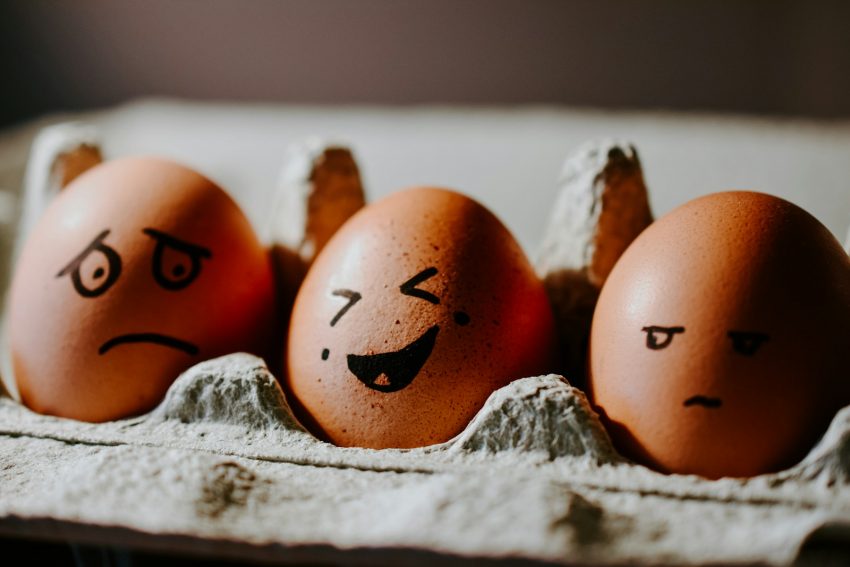
We have all been there: adrift in a sea of feeling, tossed by waves of doubt, joy, or sorrow. The prevailing wisdom often tells us to suppress these moments, to find our footing, and to get back to the “real world” as quickly as possible. We are taught that being “caught up in emotion” is a state to be escaped, a temporary chaos that stands in the way of a clear, productive life.
But what if these moments are not distractions at all? What if, instead of being something to overcome, our most intense feelings are the very ground where self-knowledge is found? What if the contradictions we feel—the push and pull of strength and vulnerability—are not signs of confusion, but hallmarks of a deeper humanity?
A short, introspective poem offers a powerful exploration of this messy truth. It doesn’t give us easy answers but instead guides us through the paradoxes of navigating our inner worlds. It suggests our emotional core is not a simple asset but a complex identity, full of contradiction, vulnerability, and profound need. Let’s unpack the wisdom held within its verses.
You Can Be Standing Still and Constantly Changing at the Same Time
One of the most disorienting parts of the human experience is the feeling of being emotionally frozen while the world continues its frantic pace. The poem captures this perfectly, describing a state of being “standing still” within a “running time” and a “dynamic set.” This is the internal conflict of feeling stuck in a moment of reflection or confusion, even as time marches relentlessly forward.
But this stillness is not passive or stuck in the past. The poem adds a crucial layer of nuance: it is a state of “Not seeing the past / Admiring the future.” This transforms the feeling from one of stasis into one of active anticipation. It is a deliberate pause, a turning away from what was to orient oneself toward what could be. Our inner clocks don’t always sync with the external world, and in these quiet moments, while we may appear still, we are often in a profound state of becoming.
I’m standing still Constantly changing In a dynamic set
True Authenticity Is a Search for Recognition
The poem draws a direct line between creative expression and a deep commitment to honesty: “I don’t want to lie / That is why, I write.” This is a powerful pledge to oneself. But the poem radically suggests that this honesty isn’t found in a vacuum. It is discovered through a vulnerable, relational search.
The speaker doesn’t find their true self by looking inward alone, but by looking outward toward another: “I’m searching to find, / My lost nature, / Seating in your eyes.” This is a staggering admission. Authenticity isn’t a promise we make only to ourselves; it’s a part of our nature we hope to see reflected in the gaze of someone we trust. This search culminates in a plea for mutual recognition, a space where both people can exist without pretense. It’s a shift from the performance of self to the vulnerable desire to be truly seen.
I want you to be you And me to be me
Far from lie, Keen to be kind
Self-Doubt Isn’t Weakness; It’s Introspection
In a culture that prizes unwavering confidence, doubt is often framed as failure. The poem challenges this notion directly. After the vulnerable admission of searching for one’s nature in another, a question naturally arises: “Have I done enough? / I doubt, I doubt.” This is not a moment of weakness; it is a moment of profound introspection.
This questioning is the logical consequence of taking our connections and our inner life seriously. It is not a sign of collapse but an act of deep self-assessment. It’s the voice of a conscience checking its own work and refusing to settle for easy certainty. To doubt is to think critically, to consider our impact, and to remain open to growth. Embracing our doubts can be far more powerful than feigning a confidence we do not feel, for it is in these moments of questioning that we find the clarity to move forward with purpose.
Your Emotional Core Is Both Your Strength and Your Burden
Throughout the poem, the phrase “Caught up in emotion” builds toward a stunning crescendo. In a moment of defiant self-acceptance, the speaker claims this state not as a temporary affliction, but as their very essence. It is a declaration of identity.
Caught up in emotion, Is the best of me This is my nature,
I want you to see
Here, the analysis could end on a triumphant note. But the poem refuses such a simple conclusion. Just moments after this powerful claim, the speaker offers a startling contradiction: “Caught up in emotion / Is of, no need of it all.” What does it mean to declare something is “the best of me” and then, moments later, claim there is “no need of it”?
This is the poem’s deepest truth. Our emotional nature is not a simple strength. It is a paradox. It is the best of us—the source of our empathy, creativity, and capacity for connection. And at the same time, it can feel like an unnecessary burden, a weight we wish we could set down. To be deeply emotional is to live with this tension.
Conclusion: What If We Stopped Running?
The journey through this poem reveals that our emotional lives are not linear paths toward self-acceptance, but cyclical movements between certainty and doubt, independence and connection, pride and vulnerability.
The poem’s final lines resolve the preceding contradiction not with an answer, but with a fundamental human need. It suggests that a person is happiest when they are “Known as, / Caught up in emotion / In need of love.” The acceptance of our emotional nature isn’t about celebrating it as a solitary strength, but about understanding that it is inextricably tied to our need for connection.
In a world that rushes us to “get over” our feelings, this poem asks us to pause. It leaves us with a more profound question: What if we stopped trying to solve the contradictions of our hearts and instead learned to see them as the very definition of being human—a beautiful, messy, and constant search for a place to be seen and loved for exactly who we are?