
Click the link below
We have all been there – that feeling of being “lost in an ocean of thoughts,” where everything feels paradoxical and unstable. It is the experience of being “Static but in motion,” asked to “Be present but stay away.” This internal friction can leave you feeling like a “Division of isolated parts,” where progress halts and your “dreams shatter.” It is a space where we often cannot find a “non-judgmental presence,” replaced instead by a storm of self-criticism and uncertainty.
But what if this experience isn’t the destination? What if, instead of a dead end, doubt is actually a necessary passage? This perspective suggests that the unsettling feeling of uncertainty isn’t a sign of failure, but rather a transitional space you must move through to reach something new. It reframes doubt as a powerful, constructive process that leads directly to growth and clarity.
1. Doubt Isn’t a Dead End—It’s a Bridge
A more poetic perspective re-imagines doubt not as a place, but as a passage. It offers a potent metaphor: doubt is a bridge that connects two fundamentally different states of being. It is a process that links where you are with where you could be.
On one side of this bridge is the pain that triggers profound doubt—the experience of “escaping” from something, the “brain shattering” feeling of your old reality breaking apart. On the other side is a new “reality” and the transformative process of “becoming.” By viewing doubt as a bridge, you transform it from a state of paralysis into a state of being “in motion.” You are not lost; you are simply in transit.
Doubt is more like a bridge, A process to link, Escaping is on one side And reality is on the other!
2. The State of Doubt is a Point of Choice, Not Paralysis
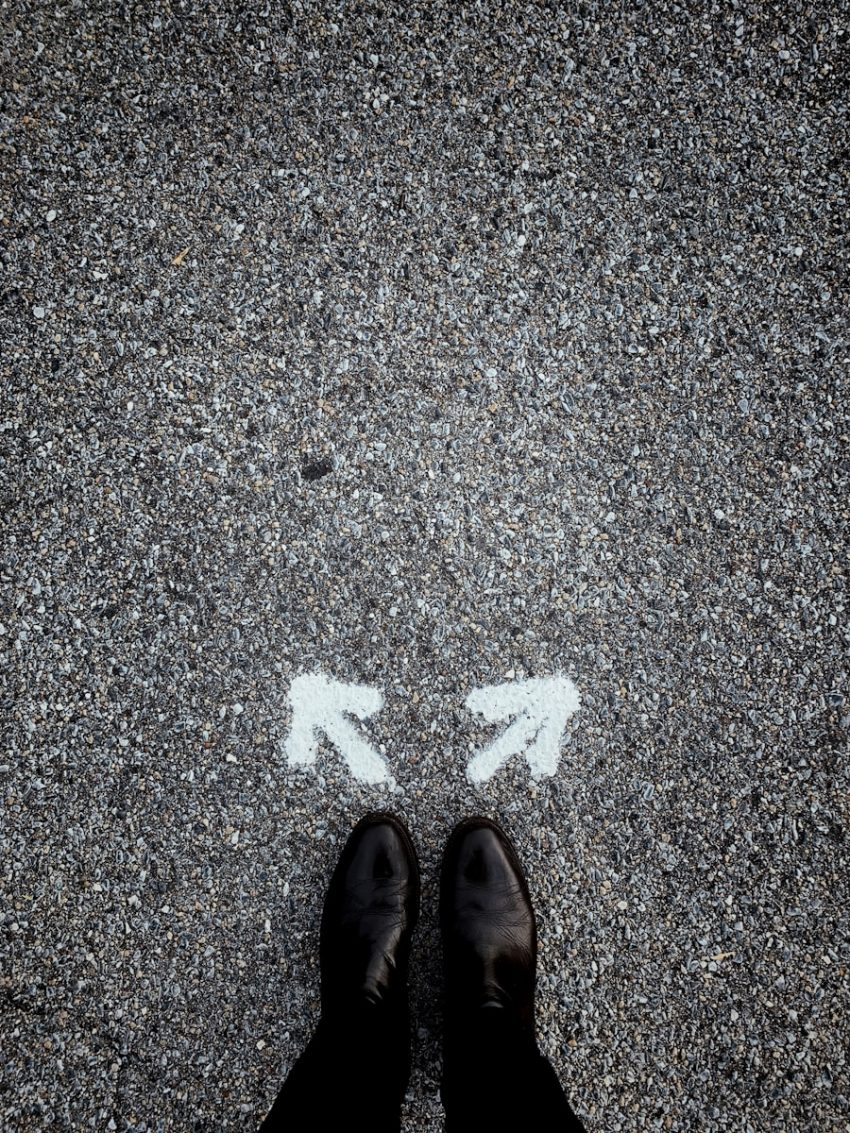
Standing on the bridge of doubt presents a critical choice. This is not a passive state where you are a victim of your thoughts. It is an active moment where you hold the power to decide which direction you will move. The poem presents these two paths clearly: one side is “doubting,” and the other is “believing.”
This is an empowering perspective. To remain in “doubting” is to stay static on the bridge, paralyzed by uncertainty. But to choose “believing” is to begin walking. Instead of being trapped, you are positioned as an agent who can consciously “Reason by judgment” and make a deliberate move. The “Choice is yours” is not merely a choice between two abstract ideas, but a commitment to walk toward the reality of your own becoming.
3. The Path to “Becoming” Runs Directly Through Doubt
This choice to believe—to step forward into uncertainty—is what ignites the process of personal growth, which the text calls “becoming.” This isn’t a vague concept; it’s defined by a series of concrete, positive actions that are only made possible by moving through the discomfort of the bridge.
The journey across it enables:
- The ability of changing
- The simplicity of forgetting
- The striving of improvement
- The possibility of overcoming
This suggests that growth is not achieved by avoiding doubt, but by embracing its function. We must experience the confusion to find our way to a new understanding. As the text wisely notes, “There is need in doubt / Clarity of overcoming.” Progress and clarity are not just waiting on the other side; they are forged in the crossing itself.
To see doubt as a transitional bridge is to fundamentally change your relationship with uncertainty. The final wisdom offered is that “Life is a place to experience / Thought, feeling and action.” Doubt is simply one of those experiences. It is a catalyst, and we are not defined by the doubt itself, but by how we choose to move through it. Ultimately, “We get what we perceive,” and the journey is about “Balancing our progression” as we walk.
Knowing that we get what we perceive, how will you choose to see the bridge before you?